If your idea of the perfect afternoon involves a vintage bookshop, a slice of cake, and then another bookshop, then I hope that this blog is your jam (and your sponge). I review vintage children’s literature, picture books, adult non-fiction and everything in between. I’m delighted that you’re here!
Elizabeth Taylor by Donald Spoto

Elizabeth Taylor by Donald Spoto
My rating: 3 of 5 stars
I have been having feelings, I think, about how women are written about in biography and in particular, about female movie stars. There is something that I’m yet to quite tease out about how their body becomes the centre of attention and how this is kind of appropriated (perhaps?) through the act of biography until the woman herself becomes marginalised and somewhat othered from her own story. I’m not even sure if that’s the best way to express it but for now, it will hopefully serve to indicate how bothered I am by this process, this small-making thing, and I am not even entirely sure that I can pick out one title which bothers me more. All I know is that I am finding it again and again in biographies, and especially those about iconic and big and definitive actresses, and I find a connection in the way that the studio treated them and I wonder, perhaps, if there is an avowedly and deliberately feminist biographer of classic Hollywood that I am yet to find.
That is not the best way to open this review and yet it is the only way I can open it for this is the story of a remarkable life and it is well told but there is still that little edge underneath it all for me. Elizabeth Taylor lived in a way that none of us can possibly hope to understand and experienced things that can only be imagined and the effort to capture all of that in a biography, albeit one which fizzles to something of a sudden and unexpected halt, is something to be praised. She was a remarkable woman living a remarkable, hypnotic experience. Her private was public, her public was private, and in the middle of all of that, is a story of love and of tenderness and of fear, I think, at it all suddenly becoming something else.
Spoto is good at what he does and this is a fiercely well-researched and documented thing and I don’t want to sound as though I am castigating this book in particular because I don’t think I am. Admittedly I am slightly castigating the meticulous detail of Taylor’s weight gain in her later career (and the mention of ‘zaftig’ which, honestly, no) and I think I am also slightly castigating the lightness of touch about Taylor’s brilliant activism work in the eighties and nineties but they are the only castigations for now. There is something slightly odd in this final section for me as a whole because (and I think it is this: Taylor does not obey the rules of narrative. She does not do what the book wants her to do and I kind of love her for that).
A remarkable, detailed, complex experience this, then, and I am yet to unpack it completely. But then that does seem to have been a common experience for those in the wake of this brilliant woman and indeed, herself.
View all my reviews

Reading Girl Annual
Girl, a spin-off magazine from Eagle, is something I’ve always had a lot of time for and so I was delighted to pick up several of the Girl Annuals recently. These are hardback compilations of the magazine’s content and can often have features about The British Snail Watching Society, comics about famous women from history, alongside a guide on how to bake gingerbread (but you have to solve a crossword in order to get the instructions). Variety does not even really begin to describe these; they’re often chaotic experiences which oscillate from inspirational to practical to “here’s how to make your own barbecue out of moss and raffia because everybody’s coming around for tea”.
I love them. I love how Girl Annual Five gave me one of my favourite comic moments in the entire world. It’s called ‘Three Sisters of Haworth’ and it’s a biopic of the Brontë sisters – and it includes Emily being basically the coolest little thing on the planet and going “I CAN SOFTEN NOTHING” when asked to chill out over Wuthering Heights. I mean, stone cold icon right there.
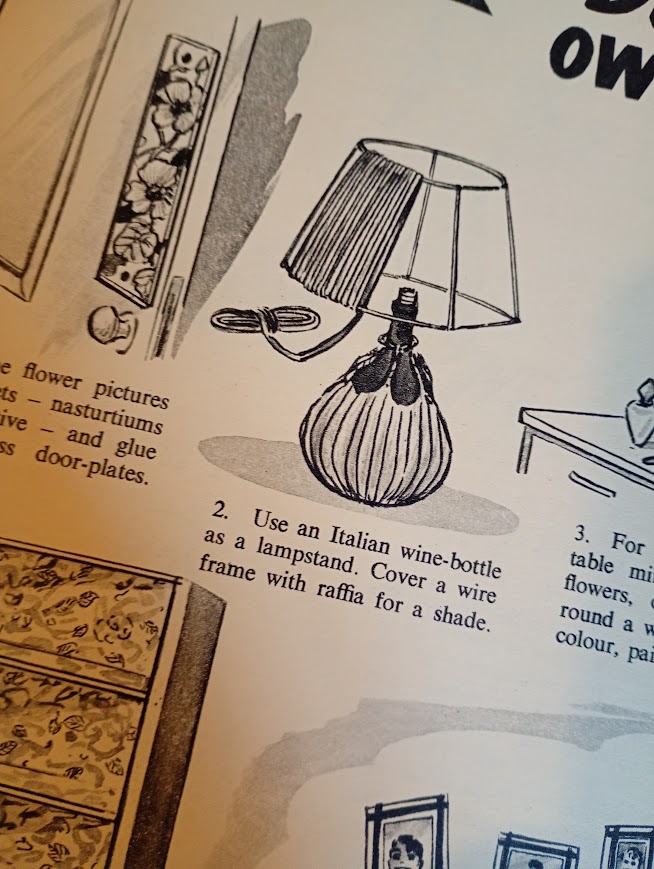

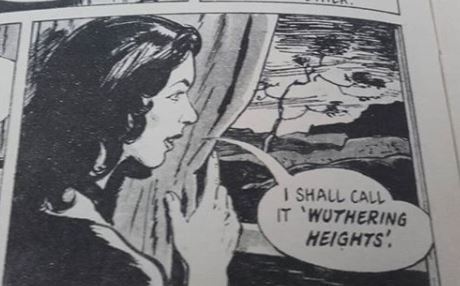
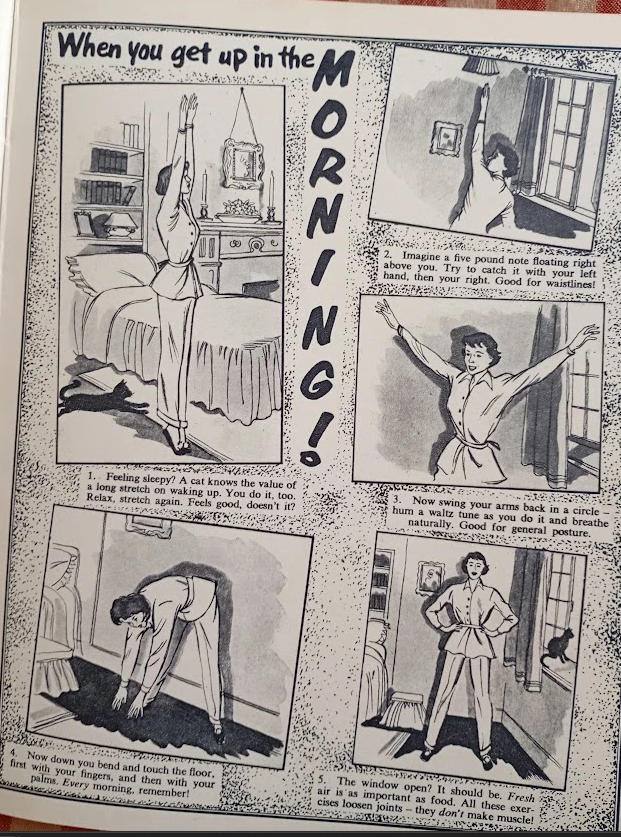
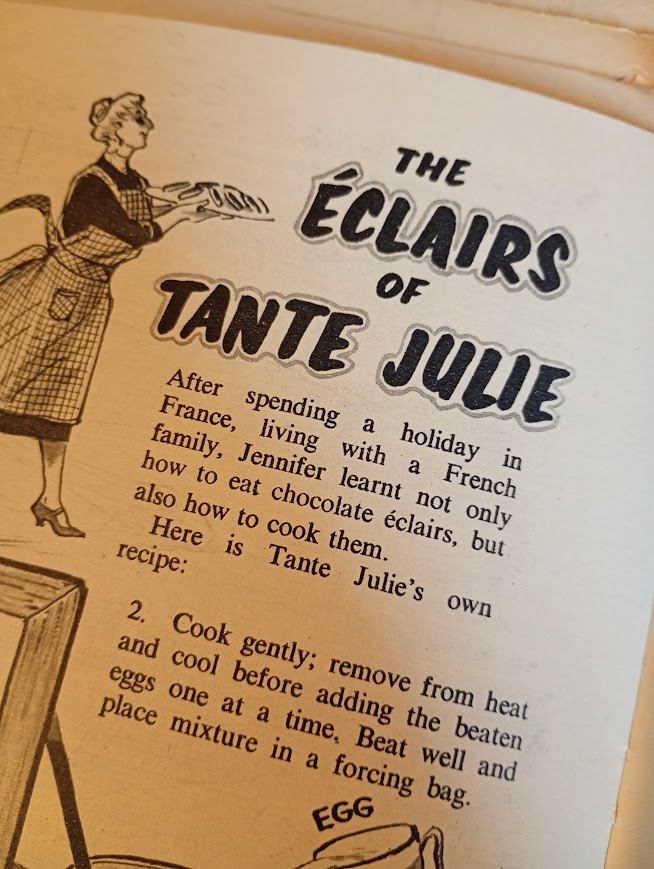
I was particularly delighted by Girl Annual Eight because the copy I bought had some surprises tucked inside of it. This is one of the joys of vintage books – they often come with strange little bonuses. They can be dedications (I still remember a dedication written in French, a love poem, on a book in a charity shop…) or photographs that people have been using as bookmarks, or even actually a plastic-wrapped piece of flat cheese (honestly, if I ever meet the person who did this, we are going to have a chat…).
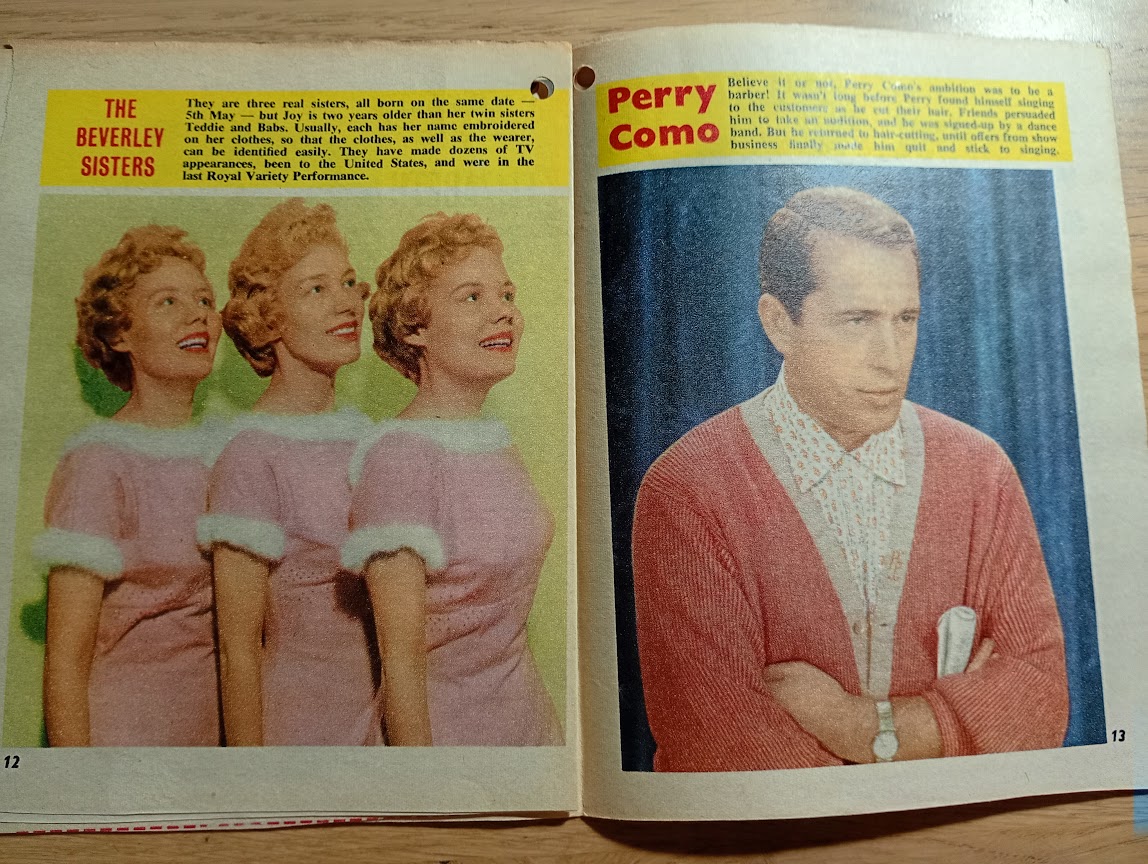
And so to the bonus material I found in one of these annuals: four supplements on the ballet, television, the “disc album” (the inverted commas aren’t there but I think implicitly they are very present), and a promotional recipe book focusing on milk. I mean: perfection. Not only is this a snapshot into (I think?) late fifties, early sixties childhood, you can also see the wavy lines at the edges where they’ve been cut out a bit exuberantly. I love stuff like this because you get a little snapshot into youth culture but also into the experience of the reader themselves. For example, I feel like they’ve had those little hole punches added in, right? I just suspect that they wouldn’t have hit the ‘Girl’ logo in that manner if they were intended. So then we’ve got the story of somebody collecting them and keeping them for future reading as well as the content itself. The layers of story about them!
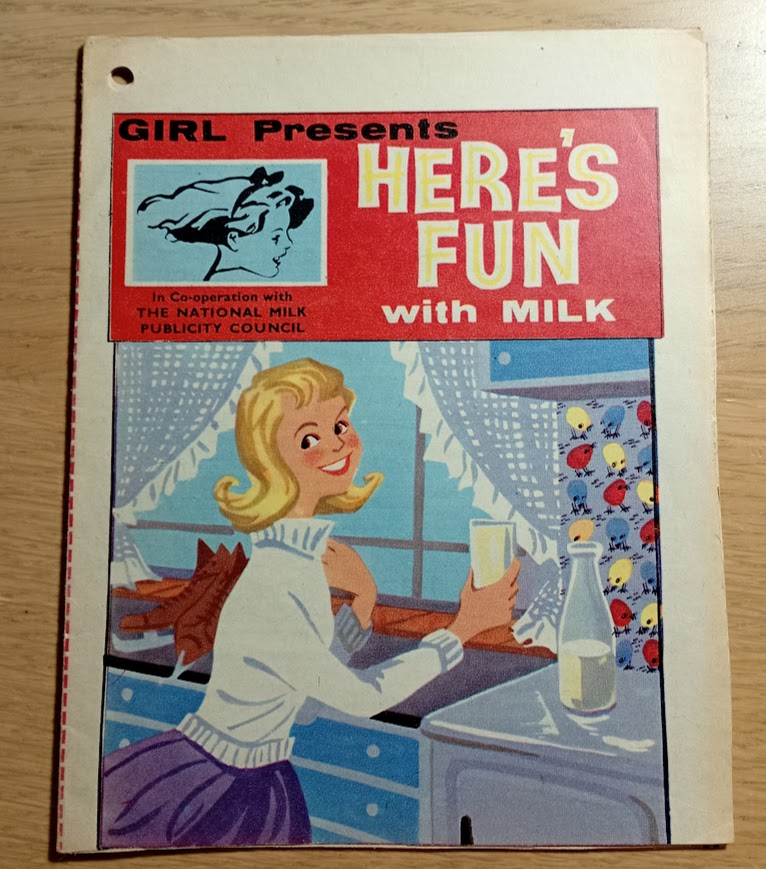
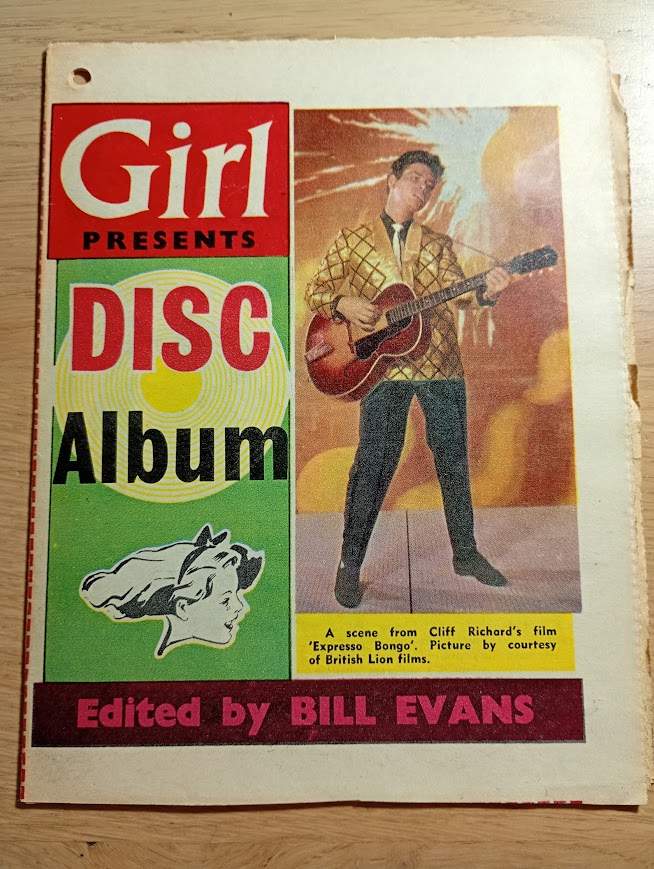
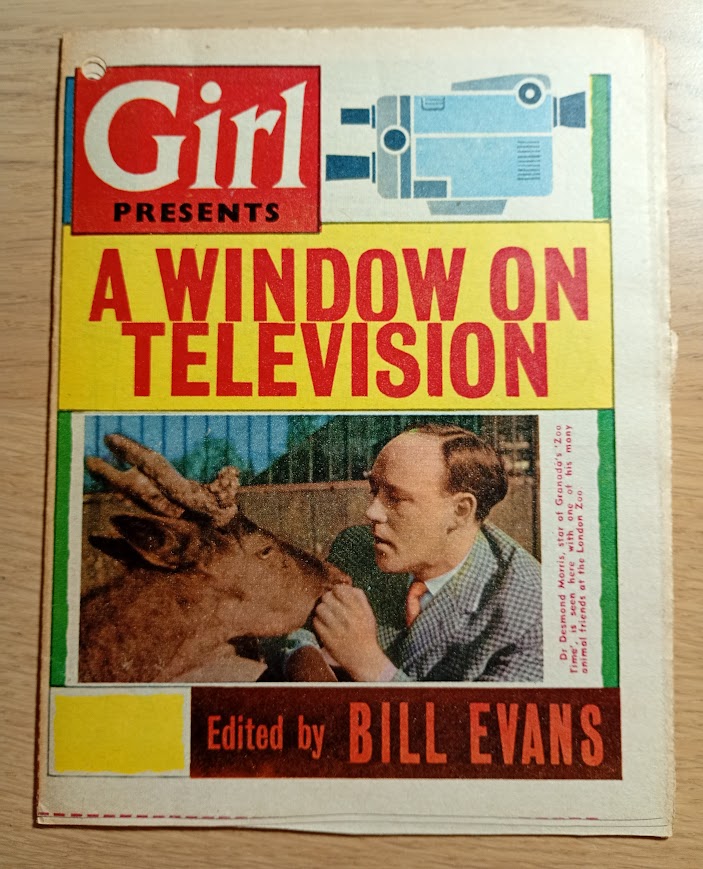
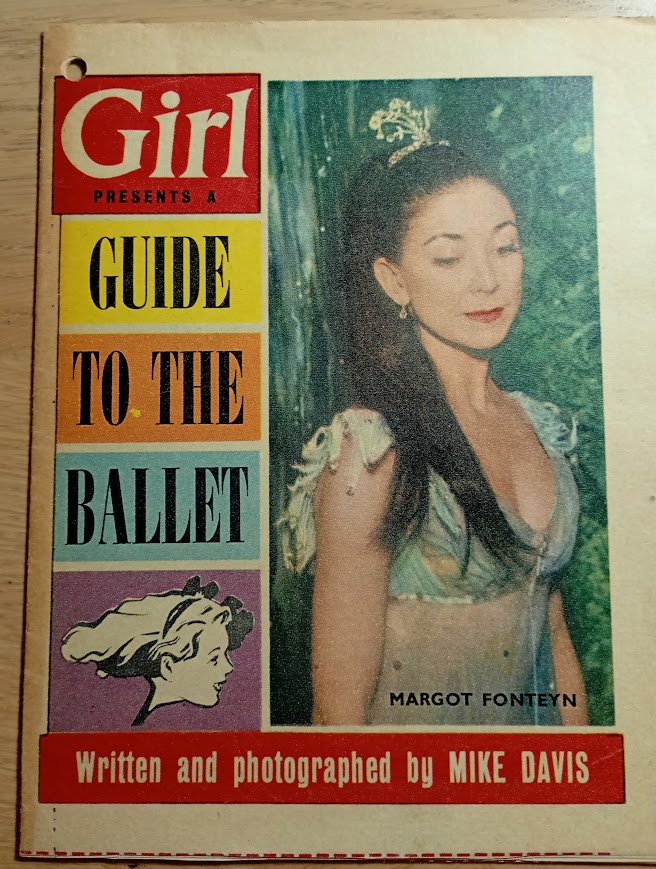
I’ll share some pictures from inside the supplements as well. Not only do we learn about Richard Todd’s dairy farm just outside of Henley, we also get to learn about some of Margot Fonteyn’s most notable roles and how to make a milkshake (add one family-sized brick of ice-cream). It’s all so innocent, somehow, and I’m fascinated at how it’s presented for the reader. I’m also fascinated by how the ballet supplement makes absolutely no sense to me (as somebody who has no awareness of the area) and yet I was very able to follow it due to a healthy reading of Lorna Hill books. (Me, wisely: Ah yes! A challenging role requiring sensitivity yet strength!).
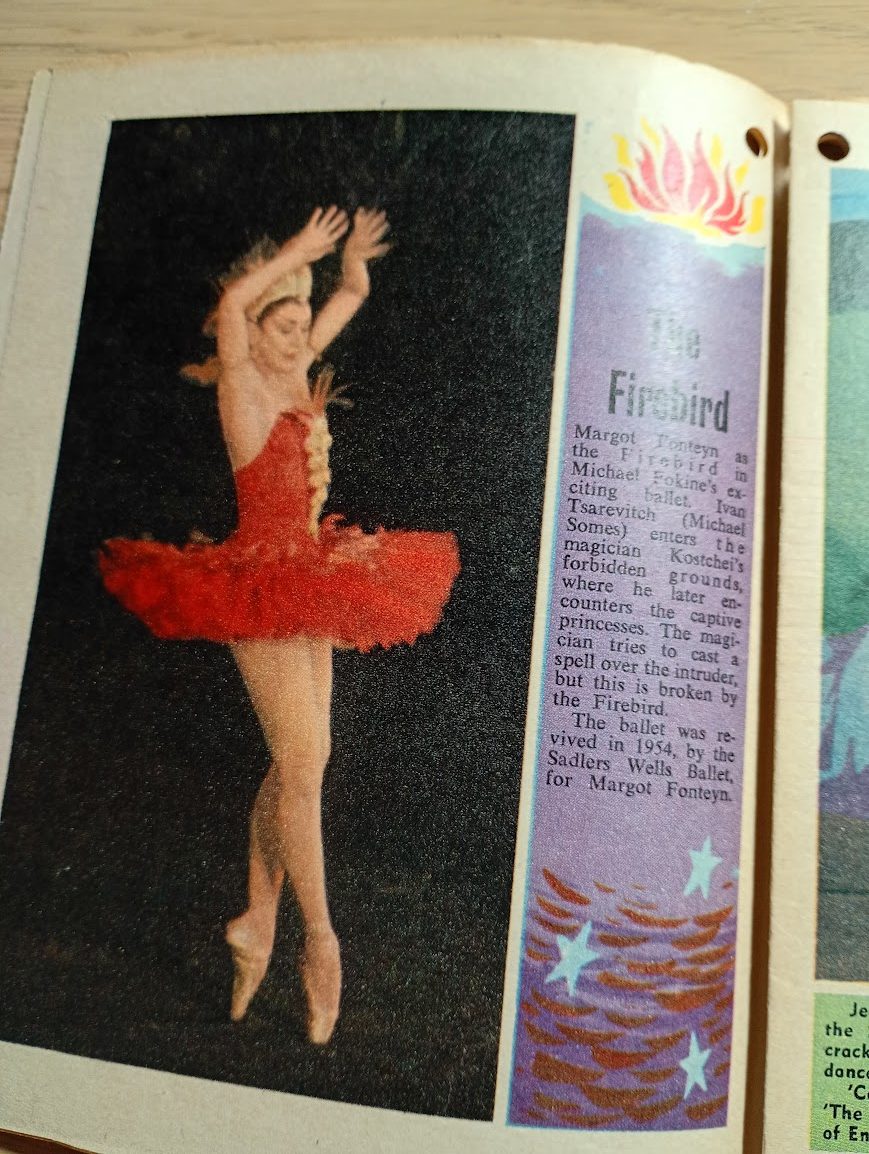
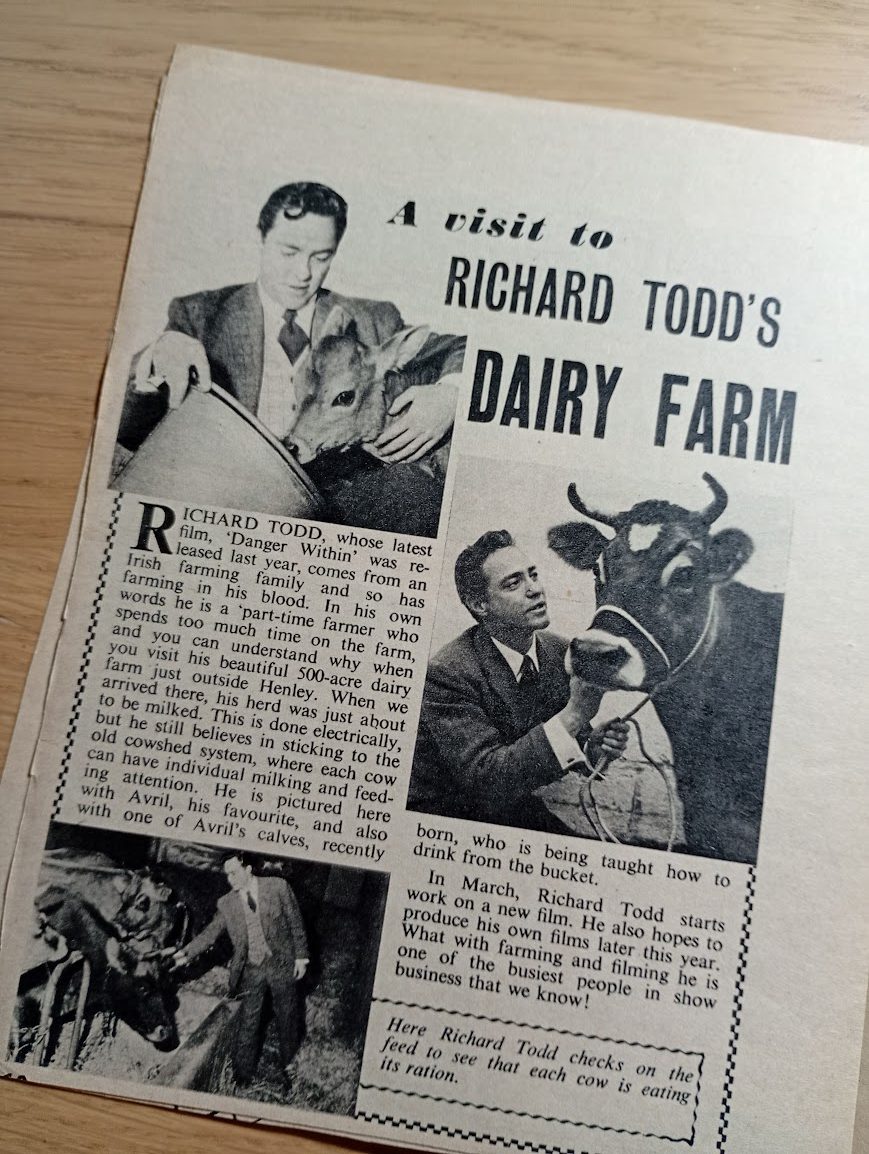
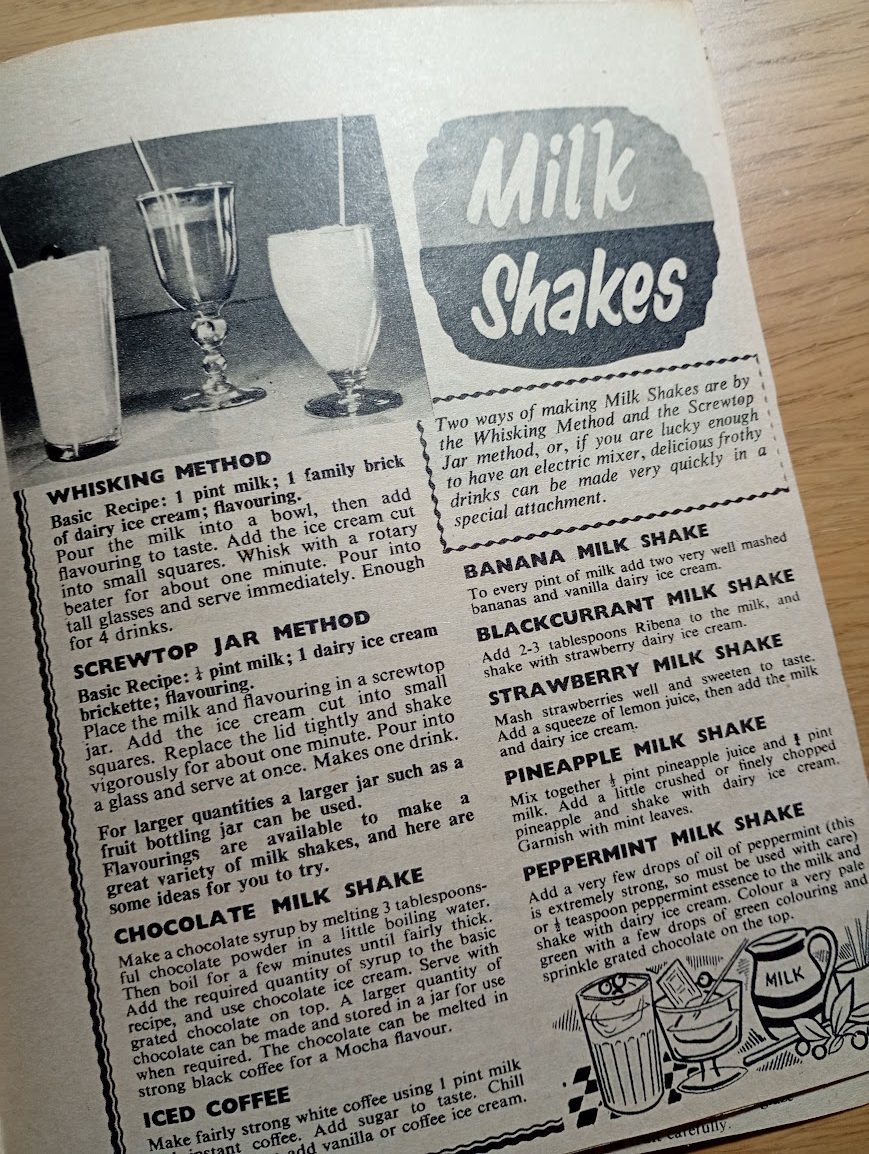
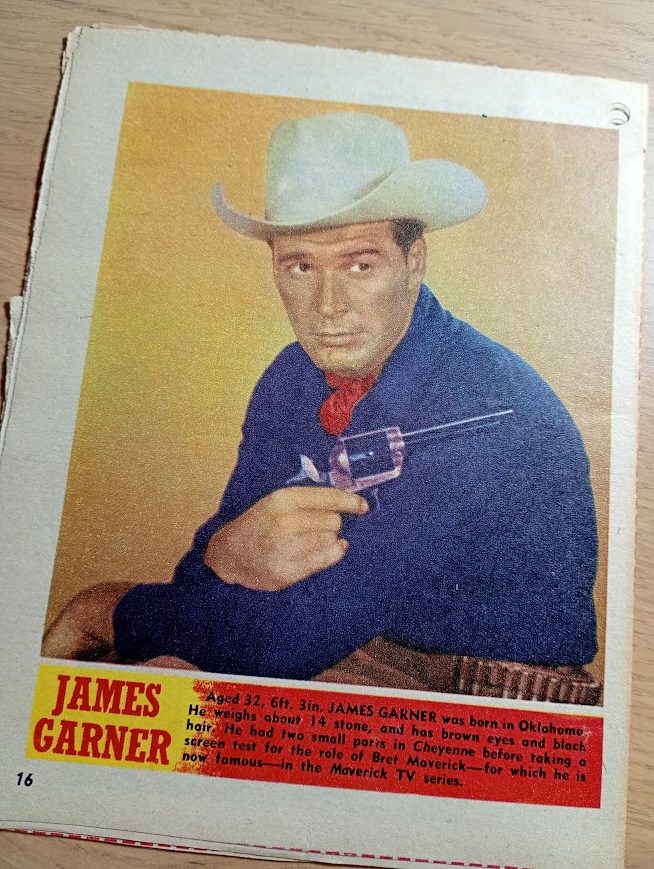
Annuals can be a funny thing to read let alone collect. Collections tend to thrive when they’re unique and odd things and annuals, by their very nature, are kind of thoroughly available things. You’ll always see a Rupert annual in a second-hand bookshop, I think, or some sort of girls+ponies title. Annuals were / are often considered as gift books and built for a certain price point and certain commercial occasions (children’s literature loves a Christmas annual, for example), and so they can get a bit … commercial? This isn’t to mark them as bad things but rather to note that by their very nature and way of being, they’re often not massively worthwhile collecting. At least, in a traditional sense of the word.
But I like to find ways beyond the traditional and look for value in objects like this because that’s what floats my literary boat. I read a lot of commercial and mass-market fiction, a lot of popular books, and a lot of what I read has been historically marginalised because of who wrote it and how it was published and who was deciding what was critically cool. (Am I over Humphrey Carpenter’s wholesale dismissal of Angela Brazil in Secret Gardens? No, I am not.)
(Actually, talking about Angela Brazil, I’m yet to read a study about prize stickers in the front of these – the amount I’ve come across which were given as Sunday School prizes!).
Literary value has been historically articulated in some very specific ways and so collections of literature have been shaped in very specific ways as a result. It’s really interesting to me, for example, that we rarely get archives of childhood ‘mess’ because that’s not easily seen as having value. And yet, for me, that’s the precise sort of thing that I want to see archived and collected and talked about. I’m not arguing here for you to scoop up every drawing your child has made and discarded (though in a way, I think that maybe I am?). What I’m arguing for is finding value in the material that isn’t necessarily, traditionally or historically understood as valuable.
Girl is valuable. It’s deliciously, delightfully valuable. Not only are these snapshots of childhood reading, they’re also lessons in social rules and expectations about girlhood, and the role of comics in British cultural history. They document crafts and makes (how to make animals out of corks! lamps out of Italian wine bottles!) that speak of trends and tastes of that time but nowadays read like something out of long lost history (and make me wonder about the loss of cultural knowledge about crafting in the process). This is culture and it’s a form of culture which can get so easily lost if you cling to traditional patterns of value and formalised ways of reading.
So screw that. Read what you want. Read how you want. Read popular. Read niche. Read historical material for children. Read contemporary. Find the links between then and now and let them become flesh, blood and bone. There is something so fascinatingly delicious about allowing these threads to happen, these connections to be made. Children’s literature does not exist in a bubble. Everything connects. And you, as the reader, you get to make the connections. And that’s everything.
Introducing An Occasional Podcast About Children’s Literature
Let me explain…
For a while I’ve been wanting to do a podcast and now I have. It’s called Auther/Auther and Episode One: Angela Brazil and the New Girl is now live. If you’d like to listen and if I’ve done it right, then you can find it on all the places where you normally find podcasts. And if you can’t find it there, then I will include a link to it here.
Episode One: Angela Brazil and the New Girl – An Occasional Podcast about Children's Literature
Auther/Auther is an occasional podcast about children’s literature and the writers behind it. My focus is going to be on female writers but this will also include diverse voices as things develop. I’m describing it as occasional because it will be (unless somebody provides me with Substantial Funding) and because I think there’s something kind of interesting in doing this sort of thing slowly. Slow content. Rich content. That kind of jazz.
Future episodes will come (occasionally) and I’m still learning how to audio edit (thank YOU for ignoring any rubbish bits) and I’m enjoying the process immensely. I hope you enjoy listening to it as well.
The Saturdays by Elizabeth Enright
The Saturdays by Elizabeth Enright
My rating: 5 of 5 stars
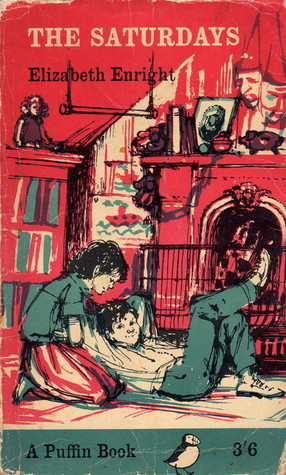
Goodness me, what a delightful thing this was! I had been aware of The Saturdays for a while and finally managed to pick up a copy of it – and one which, rather deliciously, came with a cover by the legendary Shirley Hughes. I always love this period in British children’s publishing when you have absolute wonderstars of children’s literature honing their craft and popping up in Unexpected Places so this was a good sign. The second sign came a few pages in when I realised that something was happening here and it was a Good Sort Of Something. I can’t quite explain it but you can always feel it. The confidence on the page, perhaps, or the soft, sweet flow of the sentence. The way that the book always knows where it’s going. The contentment in itself. It was all there, The Saturdays is a delight and I must move to New York immediately because of this.
The Saturdays concerns the Melendy family and sees them decide to pool their pocket money together for a series of perfect Saturday adventures. Each individual is allowed a day of their own with an increased budget before the next person has theirs. It’s such a subtle and quiet premise that you might kind of go ‘so dude’s where’s the drama?’ but that’s not how this book works. This is about the world opening up before you and the realisation that there are such people in it (thank you Shakespeare). It’s about discovering the stories on your doorstep, about the wild joy of walking down the street by yourself and choosing your own destiny, and it’s about the sort of family that understands you at every inch.
I mean, ferociously charming does not even begin to capture this.
View all my reviews
Nancy at St Bride’s by Dorita Fairlie Bruce
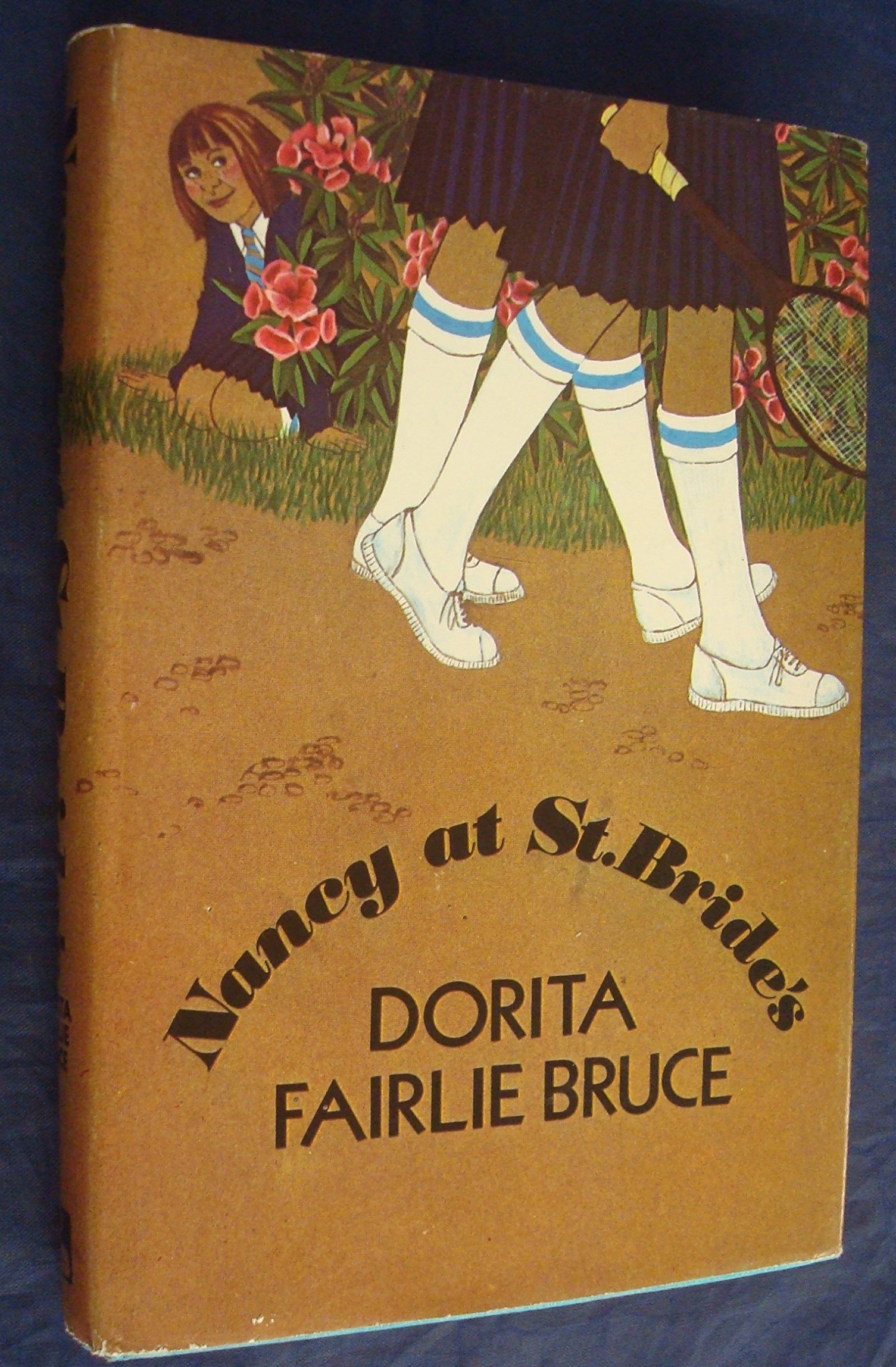
Nancy at St. Bride’s by Dorita Fairlie Bruce
My rating: 4 of 5 stars
While this is nominally the story of Nancy’s intensely chaotic first term at St Bride’s, it’s actually the story of a friendship and its fractures and its slow careful suturing back together. The friendship in question is between two of the senior girls and it’s pushed apart due to jealousy and misunderstandings and envy and although Nancy herself is a pivotal part of this, she’s kind of also not because this is a story about people and their flaws and also their good points.
How interesting is that? Enormously, she says, answering her own question because there’s nobody else in the room, because Fairlie Bruce is telling you that there’s a thousand different ways to be human and all of them are complicated and all of them require you taking the step forward to meet the other person where they are rather than wanting them to come to you. Delicious, thoughtful, incredible, really, to present this in such a calmly matter of fact manner, to not judge but rather present life as it can be and a way through it.
Nancy, herself, is frank and charming and a bundle of hard work for any adult who comes into contact with her. If you’ve come to the series in a kind of left-handed manner, as I did, and accidentally read another before this, you might know how this book resolves itself but there’s still an intense amount of charm in the journey. The school is set on an island off the West Coast of Scotland, madly evocative in every step, the children are allowed an intense amount of freedom and take full advantage of it, you kind of desperately want to have gone there to school yourself and that’s exactly what these books should do.
Bonus points for being one of the few books I’ve come across from this period to include a student who uses a wheelchair however please do note some dated and now offensive language here.
View all my reviews
Snowy River Brumby by Elyne Mitchell
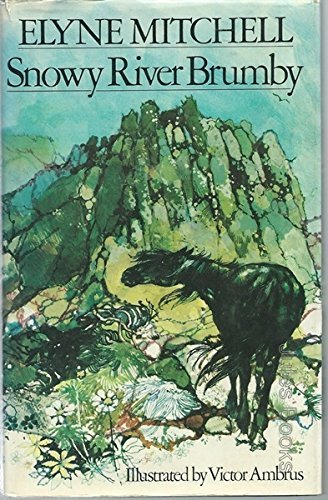
Snowy River brumby by Elyne Mitchell
My rating: 5 of 5 stars
There is something rather perfect about Elyne Mitchell when she gets going and this is a book in which she gets going. It is part of a series, though perfectly readable in its own right, and tells the story of a family of brumbies and their connection with a family. This is a bald summary and a poor one for it gives you nothing of the achingly wild and wistful richness of Mitchell’s prose. There have been books of hers which I’ve struggled with and books which I’d immediately describe as classics and this, I think, is the good stuff. I don’t think it’s a classic but I think it’s rather delicious and tender and spine-tingling and that’s not a bad thing to be in the slightest, not when you have an author who is doing what she is good at and doing it very, very well.
I’ve often thought of pony books as something of an early romance, a way for young readers to reckon with the world about them and their position within it, a moment where we/they/us learn how to care for somebody else other than ourselves, and the slow, subtle magic of Snowy River Brumby is all of this, entirely. There are moment when it falters but barely, briefly, a stumble in the dark, a hoof slipping off stone, and then you’re back in the bush, in a countryside that can feel fiercely alien and yet somehow the most perfect, entrancing place in the world.
I love how these books feel, you know? I love the moments where you realise that something is going wrong the same moment that the horses do, when the weather turns and you realise the danger that’s out there, and that somehow, something is about to happen. I love how Mitchell trusts you to go with her (the faith of a good author in their reader is, I think, paramount), and how she trusts that you will stay with her.
Pony books give you everything, really, and more than that, they give you resonance and heart and something, perhaps ironically enough, profoundly human.
View all my reviews
Beechy of the Harbour School by Elinor M. Brent-Dyer
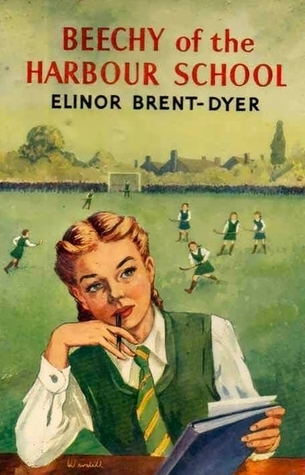
Beechy of the Harbour School by Elinor M. Brent-Dyer
My rating: 3 of 5 stars
A slight but rather genuine thing, Beechy of the Harbour School does not attempt to reinvent the wheel but still gives you something quietly competent beneath it. The titular Beechy, a nickname for her actual name of ‘Bice’, is the lead character and this is her first term at the Harbour School. Inevitably she comes into conflict with another girl and inevitably, things get sorted out in a rather deft little ‘crikey, we’ve only got a few pages left to go’ sort of manner. None of this is a spoiler, by the way, because we all know how these books go by now and like I said: no reinvented wheel here.
But this is fun. It’s a little bit The School by the River and a little bit A Genius at the Chalet School and it has that kind of very close family vibe and a ‘wisdom is my middle name’ Headteacher which is just all very comfortable and familiar and rather sweet with it. Brent-Dyer knows what she’s doing at this point and even though there are flashes of thinner stuff here and I wouldn’t especially characterise this as ‘outstanding Exile-esque stuff’, there’s still enough strength and confidence and skill to give you something very pleasant.
Brent-Dyer’s always strong with her adults and this is no exception. I particularly enjoyed one teacher who, when presented with a pupil who ‘pads’ her writing with adjectives, sets her assignments which won’t allow this. I also enjoyed the same teacher asking her students to write about girls fifty years ago which is what I did in my PhD and was quite the startling thing to suddenly see on the page. Everything is already done! Nothing is new!
As a whole: fun, one for completionists, not the best EBD but definitely not the worst. If we have a sliding scale from Exile to Althea, it’s definitely towards the top of the middle (let’s say, it’s a hearty Island / Richenda). (if you know you know, etc, etc).
View all my reviews
The Answers to The Sixth Ever Quite Niche Children’s Literature Christmas Quiz
Answers! Get your answers! (And if you’re looking for the original quiz itself, then here you go).
Round One: Lucky Thirteen!
- Room 13 = Robert Swindells
- The Secret of Platform 13 = Eva Ibbotson
- The 13 1/2 Lives of Captain Bluebear = Walter Moers
- 13 Secrets = Michelle Harrison
- The 13-Storey Treehouse = Andy Griffiths
Round Two: Trilingual Translations
- The Chalet School Wins the Tour = The Chalet School Wins The Trick
- A Headmaster of the Chalet School = A Leader in the Chalet School
- The Chalet School Repeats the Violation = The Chalet School Does It Again
- The Bride Runs the Chalet School = Bride Leads the Chalet School
- The Transition to Adulthood at the Chalet School = The Coming of Age of the Chalet School
Round Three: Name That Mountain
- Jon Thrice =Tiernjoch
- Cents Sondheim Zip =Mondscheinspitze
- Be Of Prank =Barenkopf
- Cozen Snipe Thinness=Sonnenscheinspitze
- Badman Blare=Barenbadalm
Round Four: Hot Doctor Said What?
- “Right! Move back, [NAME]! [NAME], secure the rope round the axe. What’s that? Climbing-net? Good! Give him to me!” = Dr Eugen Courvoisier in Summer Term At The Chalet School.
- “Have your lemonade and take a Leckerli each. You girls are rotten bad hostesses. Here’s poor [NAME] standing looking longingly at everything and you can’t even offer her one little cake!” = Dr Jack Maynard in The Chalet School and Richenda
- “I think you will all like to know that the dolls’ house has netted twenty-five pounds five shillings” = Dr Frank Peters in Carola Storms the Chalet School.
- “…I will take a lantern now and go as far as I dare by its light, but I doubt if we shall find anything until the morning.” = Dr Gottfried Mensch in Eustacia at the Chalet School.
- “I thought perhaps the poor thing was shy of promenading down the aisle with everyone staring at her and I was trying to encourage her.” = Dr Laurence Rosomon in Joey Goes to the Oberland
Round Five: Name that animal book!
- Name that pony book: “The spotted circus horse with a back as flat as a table from years of being danced on by ladies in spangles and rosined shoes” = Stranger at Follyfoot by Monica Dickens
- Name that dog book: “[NAME] was outpaced by a man in a bowler hat and dark suit, carrying a briefcase. He had walked from Tooting and was going to his office in the City, where he liked to be at his desk by half past eight in the morning. He did this every morning – he was not a married man.” = A Dog So Small by Philippa Pearce.
- Name that cat book: “It gratifies me to see how mighty you have become, my familiar…” = The Alchemist’s Cat by Robin Jarvis
- Name that bunny book: “…but my yellow-and-blue-and-orange-and-pink spotty wellies are what I love best! I never take them off, not ever” = Martha and the Bunny Brothers I ❤ School by Clara Vulliamy.
- Name that bird book: “As he stared at the giant bird hovering over the fells, [NAME] remembered the thing Mum had said once. “We all come back as birds, [NAME]! Isn’t that a lovely thought? All the lost souls of our loved ones come back with wings.” = Bird Boy by Catherine Bruton
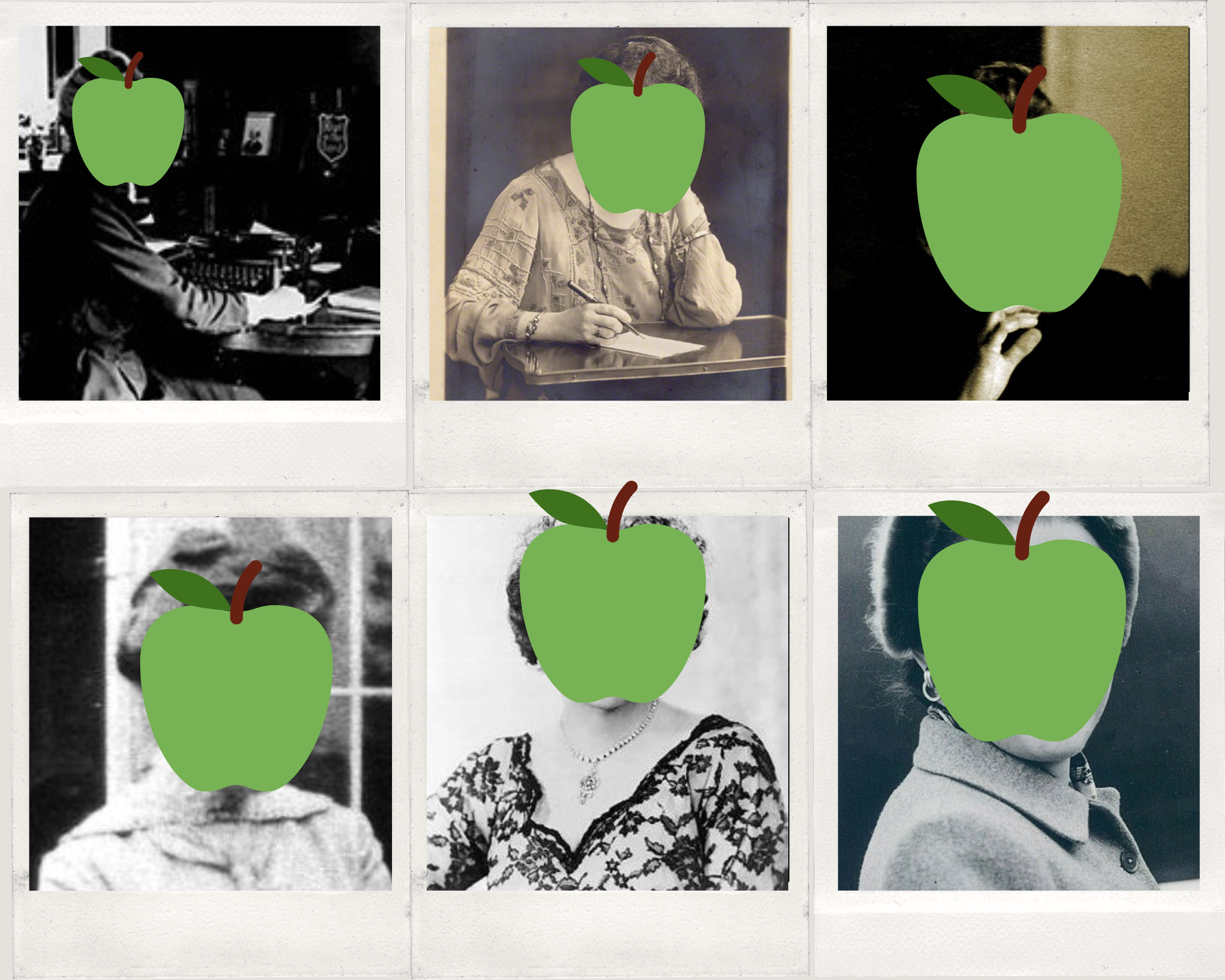
Tiebreaker: Ceci N’est Pas Une Author!
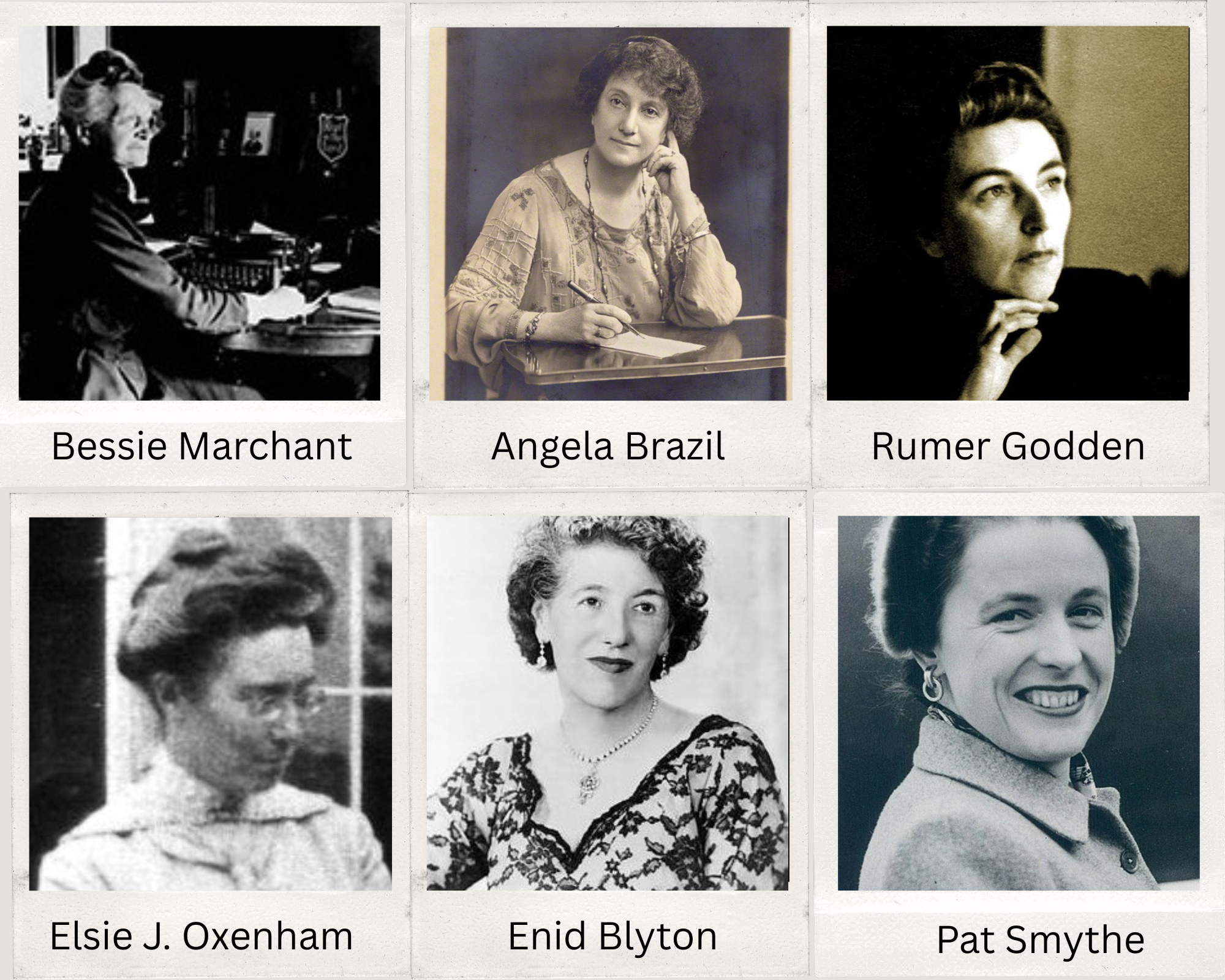
The Sixth Ever Quite Niche Children’s Literature Christmas Quiz
It’s the most wonderful time of the year! Yes, the one where I try to desperately avoid making typos and hope that I’ve not messed up (apologies in advance if I have….) – it’s the Christmas quiz!
If you’re new here, I’ve done a Christmas quiz of a Very Niche Literary Nature over the past few years (here’s the archive). I publish the quiz itself on Christmas Eve and you get the answers on New Year’s Eve. It is a thank you to you and yours for all your support over the year. I am a small, happy fish within the world and it’s all down to people like you. Thank you! Please get at least one point!
There are five rounds of five questions each and a bonus tiebreaker round. Good luck!
Round One: Lucky Thirteen!
Please name the author of….
- Room 13
- The Secret of Platform 13
- The 13 1/2 Lives of Captain Bluebear
- 13 Secrets
- The 13-Storey Treehouse
Round Two: Trilingual Translations
These Chalet School titles have been translated from English into French and then into German and then back into English with the help of Google Translate. Name that Chalet School book!
- The Chalet School Wins the Tour
- A Headmaster of the Chalet School
- The Chalet School Repeats the Violation
- The Bride Runs the Chalet School
- The Transition to Adulthood at the Chalet School
Round Three: Name That Mountain
The Chalet School girls loved nothing more than falling off a mountain or getting stuck on top of one – so can you figure these anagrammed mountains? (Some of them, I think, might be more “alpine passes” or “alms” or “hills” then actual “mountains” but I am not a “geographer” so let’s just let that moment of doubt add a bit of frisson to this round…).
- Jon Thrice
- Cents Sondheim Zip
- Be Of Prank
- Cozen Snipe Thinness
- Badman Blare
Round Four: Hot Doctor Said What?
We are on a Chalet School theme, I know, but what else can you do when there’s a hot doctor on the loose….SO. Which hot doctor said the following? And in which book? (I was terribly tempted just to put “hello” in this, but I am a merciful quiz mistress and have not…)
- “Right! Move back, [NAME]! [NAME], secure the rope round the axe. What’s that? Climbing-net? Good! Give him to me!”
- “Have your lemonade and take a Leckerli each. You girls are rotten bad hostesses. Here’s poor [NAME] standing looking longingly at everything and you can’t even offer her one little cake!”
- “I think you will all like to know that the dolls’ house has netted twenty-five pounds five shillings”
- “…I will take a lantern now and go as far as I dare by its light, but I doubt if we shall find anything until the morning.”
- “I thought perhaps the poor thing was shy of promenading down the aisle with everyone staring at her and I was trying to encourage her.”
Round Five: Name that animal book!
All of the following are quotes from a children’s book about or heavily featuring a particular animal. Your job is to name that book and the author…
- Name that pony book: “The spotted circus horse with a back as flat as a table from years of being danced on by ladies in spangles and rosined shoes”
- Name that dog book: “[NAME] was outpaced by a man in a bowler hat and dark suit, carrying a briefcase. He had walked from Tooting and was going to his office in the City, where he liked to be at his desk by half past eight in the morning. He did this every morning – he was not a married man.” (god what an AMAZING bit of writing this is)
- Name that cat book: “It gratifies me to see how mighty you have become, my familiar…”
- Name that rabbit book: “…but my yellow-and-blue-and-orange-and-pink spotty wellies are what I love best! I never take them off, not ever”
- Name that bird book: “As he stared at the giant bird hovering over the fells, [NAME] remembered the thing Mum had said once. “We all come back as birds, [NAME]! Isn’t that a lovely thought? All the lost souls of our loved ones come back with wings.”
Tiebreaker: Ceci N’est Pas Une Author!
It’s an icy night and the magritter’s out – the only problem is that they’ve magritted some authors. Your job is to see beyond the apple and name that author!
The Village by Marghanita Laski
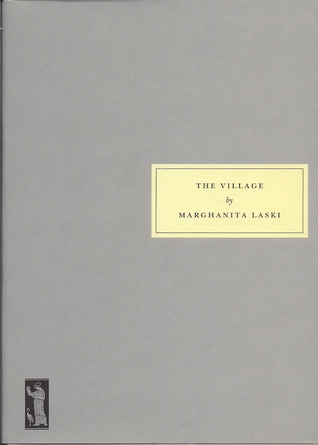
The Village by Marghanita Laski
My rating: 5 of 5 stars
There is something beyond delicious about finding a new author whose every word on every page is simply good. The Village by Marghanita Laski was something I picked up almost by accident, attracted more by the copy of Dimanche and Other Stories, and then chosen simply for the buy one get one free offer that the shop had on. But oh, what a treat such moments are, such little twists of fate when they give you an author whom you know nothing about and whose pages just give you the good stuff from day one, such small, immense moments!
The Village is the story of a reckoning. It is the end of the war and the inhabitants of Priory Dean are about to realise what it means to live at peace, marked by the wild shift in social dynamics and life-living that have characterised the war years. It begins with a cast of characters (to which, I must admit, my heart sunk: I can never keep track of people before I’ve met them) and then it moves swiftly on to introduce our key players: the Trevors and the Wilsons, polar opposites of the class spectrum and about to have their lives intertwined in an enormously unimaginable way.
This is one of those novels where you have to confess that nothing enormous really happens but in a way, that’s underselling it because ‘class’, in this society, is enormous. It marks everything and everybody in Priory Dean and god, small village life, I adore it. I adore the minutiae of this book and the way that Laski knows that things happen in villages which can leave an impact for years – the way that ‘so and so’ did this thing and so they’ll be known by that for generations, the way that lives are so very carefully managed outside the front door, the way that gossip will flow around these communities as easy as water down the stream. It is intimate and precise and very elegantly done. Laski’s a smart, smart writer and every inch of this is a treat.
View all my reviews
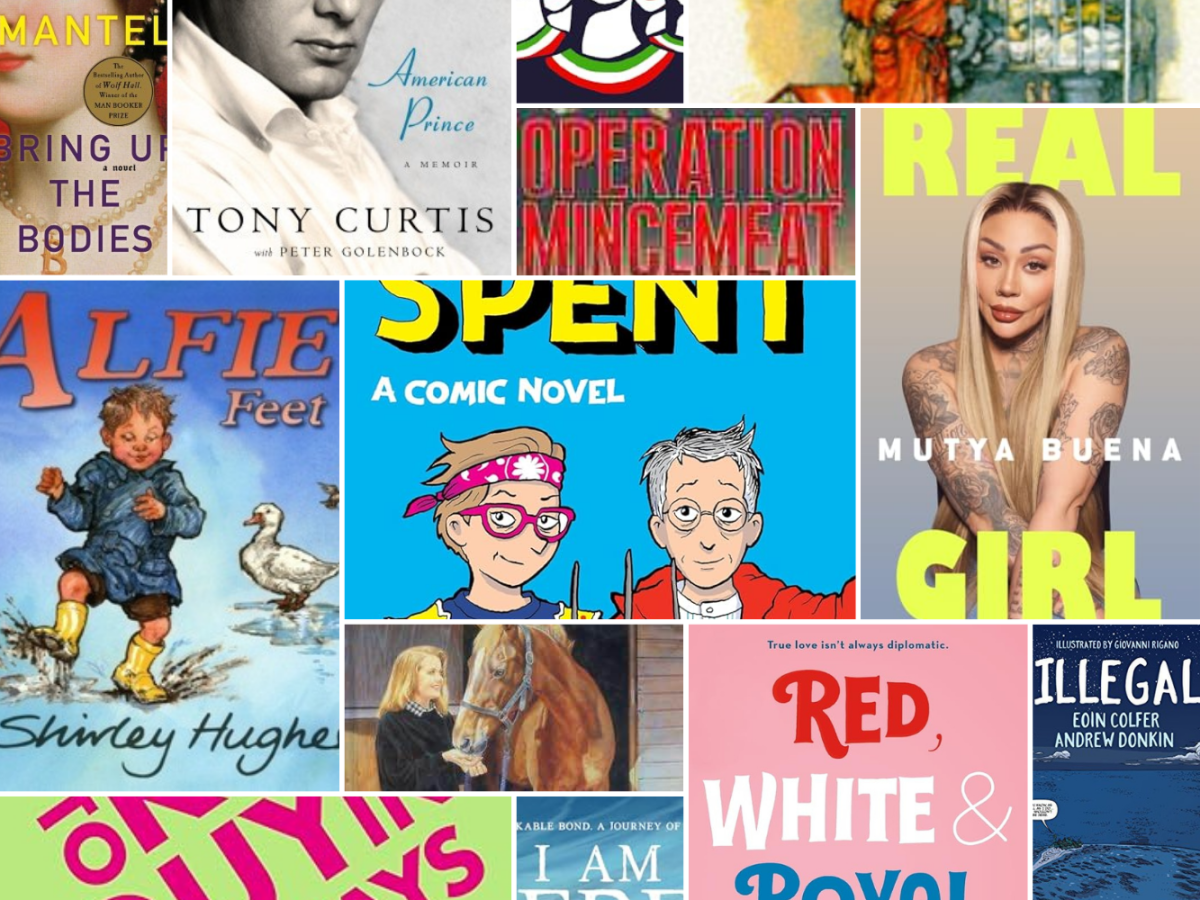
That was the year that was: a 2025 reading recap
Goodreads tells me I’ve read 114 books this year and so achieved my “target” of 60. Hurrah? I think? Look, I always find the target thing a bit funny with Goodreads and so I always sort of pick something a bit at random. One hundred! Twenty-three! Honestly, it means very little (unless you’re doing the Summer Reading Challenge and then it means EVERYTHING, have you seen those prizes??).
(Also, it’s going to be 115 by the year end: I’m halfway through the divine The Village by Marghanita Laski which I shall commend to you entirely now and do so again once I write the actual review).
So! We’ve got a year’s worth of reading here and I’d like to pick out some of my favourites for you, just in case you missed them first time round. Also, it’s not too late to buy yourself a bonus present for Christmas. You should do that. I’ll write you a note.

On a fashion history note I was very taken with British Vogue: The Biography of An Icon by Julie Summers, not only for how well researched it was but how it constantly sought to find a link between Vogue’s world and that of its readers. It really feels very much how a good non-fiction book should think about its topic. Similarly 1939: The Last Season by Anne De Courcy was a wild delight and something that I think would be rather wonderful adapted to screen, as would Supper Club by Lara Williams (feminine anger is something I think we’re yet to get right on screen).
Film reading encompassed David Niven’s incomparable autobiography Bring On The Empty Horses, the rather brilliant Women Vs Hollywood by Helen O’Hara (I am using it for research for a Mysterious Project as we speak), and several books which were turned into powerful films including: Killers of the Flower Moon by David Gann, the unsparingly detailed Black Hawk Down by Mark Bowden, and Schindler’s Ark by Thomas Kenneally. I had an enormous amount of time for Tony Curtis’ rawly honest (and often quite unflattering) memoir American Prince and also enjoyed Kiss Me Like A Stranger by Gene Wilder despite its rather careful edges.
Unexpected discoveries have characterised a lot of my reading this year. I was delighted to discover A Day in the Life of a Caveman , a Queen and Everything In Between and Battler Britton was a slightly hysteria-inducing find (subtle is not his middle name…). I also finally came across some long looked for reads: Bury My Heart at Wounded Knee details a profoundly awful story on almost every page but it is, I think, a profoundly important read.
For comics, we’ve got the remarkable Woman, Life, Freedom which was both fiercely illuminative and fiercely humbling. In many ways I’m yet to find the words for it but I’d give it to you in a heartbeat. I also loved the sparkily distinct Boss of the Underworld: Shirley vs the Green Menace; and a return to the ever glorious Corpse Talk with Ground-Breaking Rebels (perfect, although I do wonder when we’ll retire ‘rebel’ in titles). I adored every inch of Phoebe and Her Unicorn (perfect for your pony obsessed little ones. And big ones. And also everyone), and Loki was everything everybody said it was.
Favourites from the year? Well, as I look down the list and cross check it against my “perfect” shelf, we’ve got a couple of Shirley Hughes’ – An Evening At Alfie’s and Alfie’s Feet. Fingersmith, a book I seem to read every ten years or so, is there as well, as is the sweetly heartbreaking-yet-also-perfect Gobbolino the Witch’s Cat, the previously mentioned Phoebe and The Unicorn (divine), and the graphic novel adaptation of Lord of The Flies. In terms of perfect covers, well it’s Spent by Alison Bechdel; How to Kill A Guy In Ten Ways by Eve Kellman, and the iconic Riders by Jilly Cooper.
It’s been a good year. A varied one. I like Lord of the Flies existing in the same space as Alfie (and I think that it might find some rather interesting common space with Riders…). I am yet to write a picture book or comic of my own but find myself yearning to do so. Perhaps this time next year? Fingers crossed!
(And just a reminder: The Village – Marghanita Laski. Divine. Small villages, nuanced class discussion, set at the end of WW2, a society in flux, deliciously quiet, fiercely acute, a general dream).
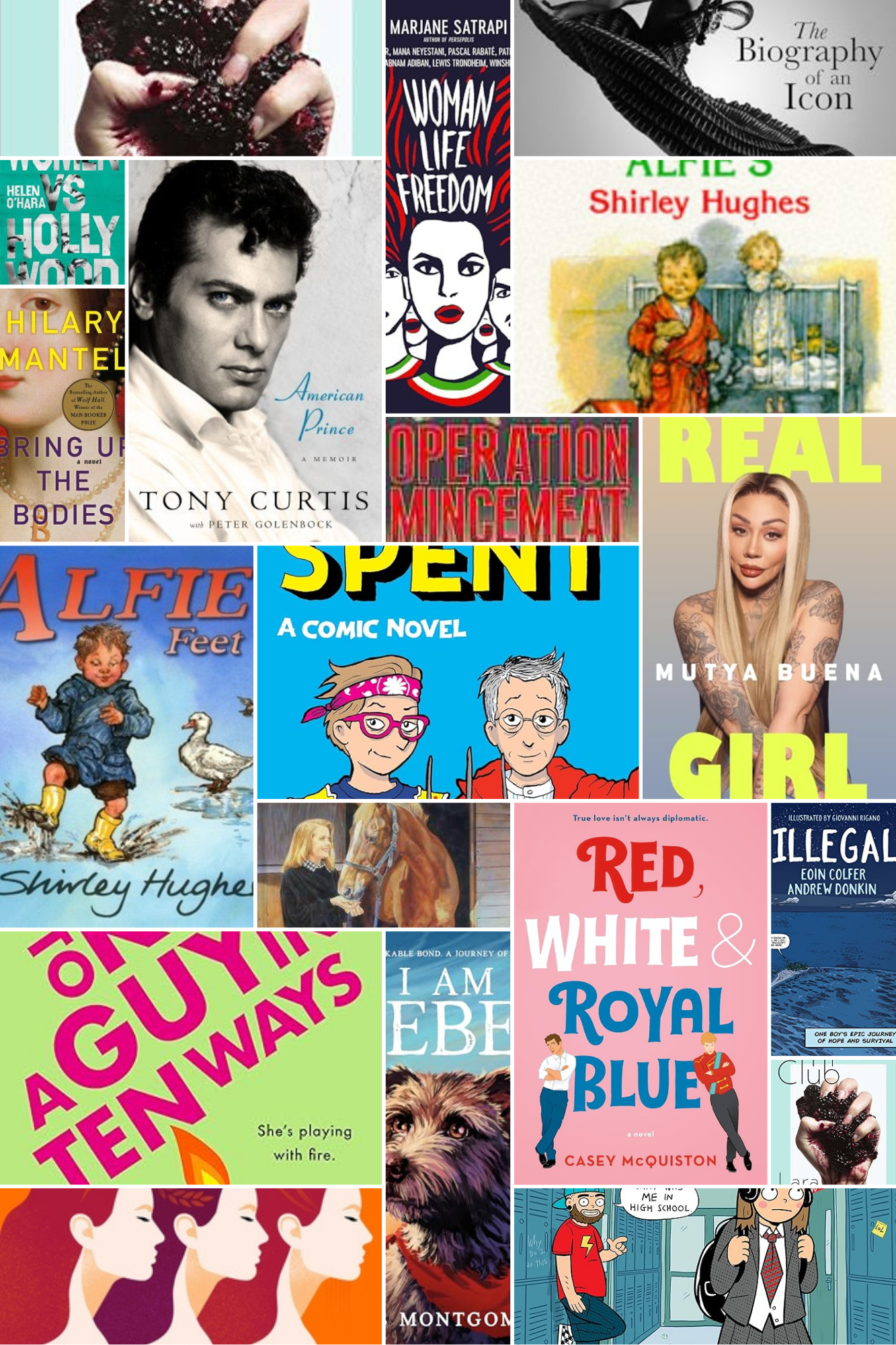
Spent by Alison Bechdel

Spent: A Comic Novel by Alison Bechdel
My rating: 5 of 5 stars
I just loved this. It’s been a while since I’ve read Bechdel’s work and I was delighted to come across this in the library and that feeling did not diminish one iota upon reading. Bechdel is wrestling with the world and her position in it and the fact that everything is pretty messed up. And yet it isn’t; she is part of a loving, deliciously funny, passionate, quirky, glorious space within the world and Spent tells the story of it. Alison’s pygmy goat sanctuary. Her friends’ experimentations with polyamory. Sex. Relationships. Moving from the margins to mainstream visibility due to the success of her work and TV adaptations. Becoming seen. Having her partner go viral with wood-chopping videos. Making content. Living, really, in the moment and loving who you’re with and what you’re doing.
It’s a witty, self-deprecating thing this, told in the third person by a wryly omniscient narrator about “Alison” and the art is just luscious: thick, rich colours, smart little visual jokes; GOATS, everything. It’s just so clever and so good and so palpably rich and full of such, such love for people and all of the ways that they can live their life. The thread about polyamory, including full and frank representation of their sexual relationship, is one of the more powerful threads for me and done with such grace and fun and honesty. Forgive the pun, but there’s an awful lot of love in this book.
There are characters here that Bechdel has already featured in previous work but honestly, I think you can come to this fresh and just enjoy a story of people peopling in complicated times. It’s lovely and I enjoyed it enormously.
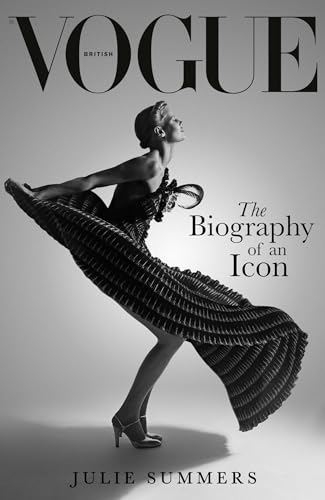
British Vogue: The Biography of an Icon by Julie Summers
My rating: 4 of 5 stars
A well-written, purposeful biography of a century at British Vogue (or “Brogue” as one character refers to it), this is a real pleasure to read. We trace the beginnings of the magazine at the turn of the century, throughout the wild-horrors of two world wars, and then into the tempestuous rises and falls of more recent decades, and throughout all of this Summers maintains a firm respect for her subject and what it does. I welcomed this a lot; the book does not minimise the achievements of a popular magazine and its relevance towards its readership – each copy often being read by dozens, if not more, of people – and how it sought to speak both for and to the women of Britain.
There’s a noticeable strength here when Summers writes about the war years and in particular, the editorship of Audrey Withers. I was not surprised to see that she has written a book about Withers (Dressed For War: The Story of Audrey Withers, Vogue editor extraordinaire from the Blitz to the Swinging Sixties) and have added that to my list of things to read. I was also rather delighted by her work around iconic figures such as Cecil Beaton and Lee Miller and their remarkable work for the magazine.
What Summers does well is recognise that little frisson of excitement that comes with archival material; that when you are looking through something and forming connections with it in order to create a story, a narrative. It’s exciting because you start to trace the bigger pictures, the ones which move across years and you start to find patterns and echoes. I was particularly interested in the treatment of royalty; from the accidental scoop of Princess Diana’s engagement through to the Duchess of Wales’ editorship and cover photo, the purple covers on mourning and the genuinely joyful coverage of Queen Elizabeth II’s coronation.
It’s a thoughtful, comprehensive and well-made thing this. Summers manages to delicately point out some of the problematic aspects of the magazine and although I’d have welcomed some more of this (and in fact, I’ve heard the author speak thoughtfully about some of these issues in an event), I think it does what it can considering its context. For me, the greater strengths of the book come in those early years because we have that distance between author and subject and so some of the digging can happen a little clearer, a little cleaner.
I liked this a lot, I really did. There’s something so delicious about it. And that cover!
View all my reviews
Jean of Storms by Elinor M. Brent-Dyer
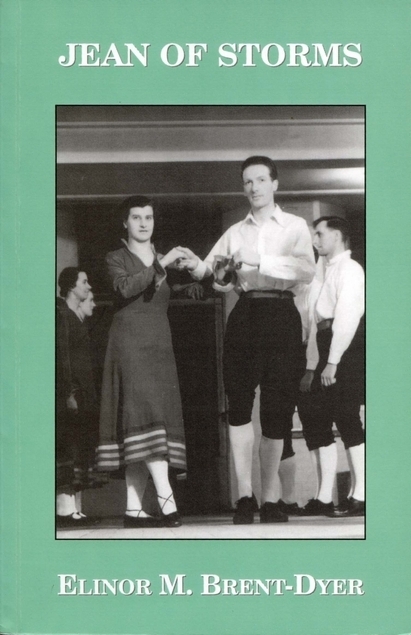
Jean of Storms by Elinor M. Brent-Dyer
My rating: 3 of 5 stars
I have been thinking about Elinor M. Brent-Dyer’s approach to romance, for she was never the most romantic of authors to begin with. She could write romance and beautifully too; that subtle, underplayed need for each other, that quiet recognition that you are not whole without somebody else at your side, but also – she could not. She could be as subtle as a brick, as delicate as mud, and she could write the sort of engagement that might want you to throw your book across the room and though I shall not name the moment, you all know the one I mean.
But then there’s this, a serialised novel for adults first published in the Shields Gazette in 1930, a kind of proto-Young Adult novel in which a hot doctor hovers on the edge of a girl’s life and we all know what’s going to happen at the end of it because a hot doctor only has one destiny in a Brent-Dyer book. It is not subtle and yet, I always find some delicate grace in this firm belief in the goodness of doctors and their eternal strength of character and reading this against Brent-Dyer’s own life always makes me find connections between the (by all accounts horrible) death of her brother and how perhaps in a powerless situation, there is power to be found in the redemptive mark of pen and paper.
There is a lot of heart in Jean of Storms although it suffers from a few too many characters being written in accents (I cannot ever describe this coherently but I hope you know what I mean – I deeply dislike it) and the stereotypes of the day have aged terribly poorly. If you come to this with a young Chalet School fan, it is one worthwhile reading yourself beforehand because they will have questions and rightly so.
I found a rather tender love for the North East in it, a rarity in Brent-Dyer’s other work that I’ve read, and some rather beautiful writing about the sea and life on the edge of the world, being part of it. It is sometimes rather lovely and sometimes rather awful and yet there are moments here that speak far beyond themselves. But then, that’s the Brent-Dyer way isn’t it? Sometimes she’s very good and sometimes she’s very bad and sometimes she’s all of that wrapped into one.
View all my reviews
Battler Britton (volume 2)
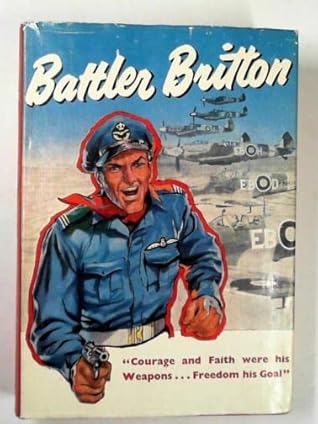
Battler Britton, Book 2 by Anon
My rating: 5 of 5 stars
I was thinking the other day about how to write “funny” (stay with me, this will make sense soon I promise…). For me, funny books have to have a sense of utter conviction about them. You have to believe in every inch of them and the “funny” needs to be legitimately earned and unremarkable, in a way. It’s the kind of thing that if you turn to the viewer and point it out, then you lose it. If you do a knowing little wink when it happens, you lose it. What you have to do is believe in it and the world that you have created and know that what you’re having there is simply what happens in this space. And when you have that conviction, that belief, that truth then what you get is an elasticity of a sort which allows the funny to happen, the outlandish to occur, the whimsy to – whim.
And all of that came to mind when I was reading Battler Britton because this book believes every inch of what it is and what it is is remarkable. It is genuinely one of the best things I have read for quite some time and although I don’t want you to think that it’s the highest piece of literature out there (for it is not), I want you to know that this book does, in the vernacular, know itself. It knows every inch of what it is and what it wants to be and because of all of that faith in what it is, you get something rather brilliant. This puts the “gung” in “ho”, the “pat” in “patriotic” and gets you home in time for tea. If you read this to a class at school, back in the fifties, I would not have been surprised to see them scaling the ramparts and attacking the canteen by the close of the day. It is feverishly patriotic, utterly determined in its righteousness, and massively, utterly beguiling because of that.
Robert Hereward (I mean, amazing) Britton is known as “Battler” by his chums and is an ace of air, sea, foot, and everything in between. This compilation sees old Battler (I can’t) fly a plane when its rotor falls off; lassoo another plane in mid-flight so that it can tow his glider (I am not making an inch of this up) and break into a prison camp so he can break out again.
This volume is a mixture of comic strips and prose fiction, with the occasional non-fiction article about planes thrown into the mix. If you imagine an old copy of Eagle, you wouldn’t be far off in the tone and style. The art is all firm chins and purpose and “you’ll never make it Battler” and “I will, by jove” and there’s a bit where he lobs a cricket ball and explodes a bridge and another where he crashes a plane onto a ship and then stands on top of the plane and says “Up and at em, Lads! Remember Nelson!” and I am content in the fact that I am not making any of this up.
I was trying to figure out the difference between Battler and Biggles and I think that, somehow, it’s that air of belief in Battler that works for me (there’s far too many b-‘s in that sentence but I’m going to leave it). Battler Britton knows exactly what it is: a firm reminder that Britain did the good and right thing during the war and you might be suffering still now but remember that somehow, somewhere, we’re still kings of the waves. And the air. And can take down enemies with just a twig and a cricket ball. We’re number one!
It has dated awfully and features more than one or two isms but it wouldn’t ever do anything but. This is a volume tied firmly to that post-war period of recovery, of rebuilding, of remembering who we are and what we stand for and why we made all the sacrifices we did. It’s full of a jaw-dropping bravado, an utter sense of determination, and all delivered at such a fierce pace and with such firm self-belief that it’s difficult to resist.
View all my reviews
Something went wrong. Please refresh the page and/or try again.
 Daisy May Johnson