Point of Departure: Experiment in Biography by James Cameron
My rating: 4 of 5 stars
There was a table in the bookshop, right at the back of the room, with several piles of books on it. The sign, recycled from a piece of packaging, said that these titles were all £1 and many of them knew it. There were books that would barely have sold the moment that they were published; great, obscure things about niche topics, even then, and things about topics that the world had moved on from a long while ago. Technology books always date quickly, often before they’ve even been published, and then there’s the maps. There’s always maps. Somebody will love them but it takes them a while to find each other.
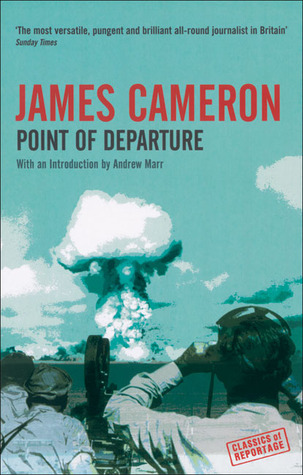
And then there was this. I thought the author was the film director until I read the blurb: this was a journalist from back in the day who had witnessed atomic bomb tests and the war in Korea. He had been a foreign correspondent, present during the Chinese invasion of Tibet and meeting characters such as Winston Churchill and Albert Schweitzer along the way. I was going to see Oppenheimer later that week. I was intrigued. But more than that: I have a fascination for those firsthand stories of people in the middle of extraordinary times. The domestic stories, I suppose. The ones where simply people try to live their life and love their loves and to simply persist in the middle of great earth-turning events.
Point of Departure chronicles some of this moments of persistence. Technically it’s a memoir, I suppose, but it sort of hovers somewhere between a ‘Greatest Hits’ and a biography. Cameron is a delicious writer; deeply opinionated, deeply political, deeply of his time, and occasionally very, very brilliant. Were I the sort to be highlighting and underlining books, then I would underline pretty much all of this. It’s quality writing. His work about the nuclear bomb tests is transcendent, similarly his writing about the Korean war, because he’s unafraid to let you know his feelings about the situation. You get the entire picture. I found myself rereading substantial parts of this, quite unable to fathom what it was I was reading until all of a sudden I did.
(There is a way, I think, to tell the horrific and that is this: to simply tell it, and Cameron gets that).
Towards the end of the collection, I felt the essays got a little thinner and the whole affair started to run out of steam. That’s a slender section of an utterly remarkable collection and no reason to step away from this volume. Rather, it could be argued as a kind of meta-reflection on that which has come before. Cameron has witnessed so much, done so much, and watched humans bring themselves to the very brink of humanity. The wars; the brutality; the frank shock of the Atomic bomb tests; any ending would feel weary in comparison to them.
I understand why Point of Departure found itself on that table at the back of the bookshop: it’s not an easy book. It’s deeply political, deeply obstreperous. And yet here I am, reading it almost sixty years after it was published, and in awe of it. Writing like this, wherever it is in the bookshop and indeed, however long it’s there, will always make itself heard.
View all my reviews
Point of Departure by James Cameron
Responses
-
That subitle would draw me in as much as the subject matter and, of course, the cover – at the height of the Cold War in the 60s and 70s I used to have vivid dreams verging on nightmares about mushroom clouds and the unexpected absolute silence that accompanied it. An excellent review – remaindered books on sales tables have often offered me neglected gems too.
-
Oh yes, I definitely think that it’s one of the best ‘surprise’ books I’ve found for a long time. (And I can imagine you did have dreams like that!).
-


 Daisy May Johnson
Leave a reply to Calmgrove Cancel reply