My rating: 5 of 5 stars
For a moment I thought I wasn’t going to enjoy revisiting this one. I had come to it with excitement, driven by memories of my first encounter with it a long, long time ago, and yet the first few pages weren’t quite working for me. I couldn’t quite figure out what it was and then, all of a sudden, I did. It was that I wasn’t quite tuned into what I was finding on the page. I had come off a run of fairly uninspiring things, books that should have worked for me and didn’t topics that worked for me and shouldn’t, and I was still in the pattern of that. The expectation that something, sooner or later, would fail.
And there was no failure in The Eagle Of The Ninth, not even the slightest breath of it. From the very first word, Sutcliff is ferociously in control of her world. Her knowledge of this space is breathtaking; everything feels lived and known and because of that, there’s this sense of totality on the page. This is Roman Britain, this is beyond the wall, this is the battle, this is the moment. I don’t think I’ve read anybody else for quite some time who gives you that sense of everything being here. Everything convinces. Hugely. Confidently. It’s beyond true.
The story itself is a fairly straightforward thing: there’s a quest plot, a story of personal growth, an adventure to be had and it’s one that is almost boy’s own in style but also, deeply complex and personal. Sutcliff is so strong here and unafraid to demonstrate the complexity of the world about her and indeed the complexity of strength itself.
It’s a dense story, tightly told, and it is difficult to read at points and yet it’s not, in the same breath. I’m not sure that makes sense so let’s try to figure it out. Writing can come with a stamp of time and place about it, of context and of origination. The world as it is impacts the stories which are told at that point of time. That’s not making any sense at all, really so let’s try again: I think what I’m trying to say is that Sutcliff tells the story as it has to be told and lets you come to it in your own space. And she trusts you to be able to do that, even when the text is dense, even when the words might not make sense at first read, first encounter. I like writers that do that. I like people who have faith in their readers and in their story. That know that everything doesn’t have to make sense here.
There’s something deeply adventurous here, in theme and in style. We don’t really have stories like this at the moment (there are exceptions to the rule, of course, but even they have been ten or fifteen years ago now) and I would like them to come back into vogue. I will be interested where the Children’s Booker Prize takes things, for example, because it feels like we’re all in a little bit of an inbetween period in the stories we tell and how we tell them. Maybe the next phase will be something like Sutcliff and the telling of stories which look back to where we’ve been and figure out how we’ve got here. I hope it shall. I think we might benefit from it.
View all my reviews
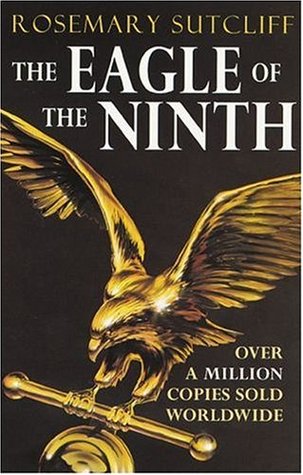
The Eagle of the Ninth by Rosemary Sutcliff
Responses
-
I read this book so many times as a kid! Listening to it with my oldest several years ago, we also still found it excellent.
-
That’s so interesting that it worked well for audio! I will have to hunt it out!
-
We found it on Hoopla, a library app, though I don’t know if it’s available in the UK or what content it has if it is.
-
-


Leave a Reply!